


Something significant is happening in Florida real estate, and it doesn’t involve interest rates, inventory, or days on market.
On June 2, 2026, the Florida Legislature passed HJR 1-F, a joint resolution placing a proposed constitutional amendment on the November 2026 ballot. If approved by at least 60% of Florida voters this November, it would represent the largest change to homeowner property taxes in Florida history.
I’ve been getting questions about this all week from clients, neighbors, and people thinking about buying or selling in Orlando. So here’s the full breakdown: what it is, what it would mean for your property tax bill, what the built-in protections are, and what it doesn’t change.
What Is HJR 1-F?
HJR 1-F stands for House Joint Resolution 1-F. It was passed during a special legislative session and approved by Florida lawmakers on June 2, 2026, passing the House 75–26 and the Senate 30–9. Because it proposes a change to the Florida Constitution, it cannot simply become law through the Legislature. It must go to Florida voters for approval.
The amendment will appear on the November 2026 general election ballot. It needs at least 60% voter approval to take effect. If it passes, the first changes would begin January 1, 2027.
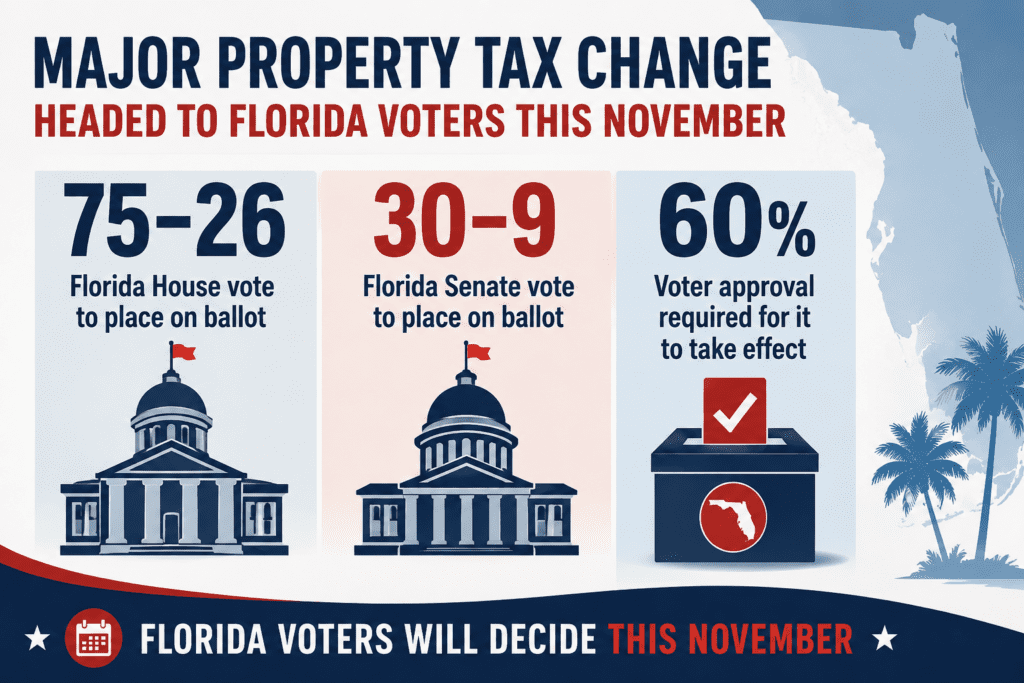
Sources: Florida Politics, Click Orlando, Florida Senate — June 2, 2026
What Would It Actually Do to Your Property Tax Bill?
Right now, Florida homeowners with a homestead, meaning this is your primary residence, receive a $50,000 exemption on their property’s assessed value before non-school property taxes are calculated. That exemption has been at $50,000 for a long time.
If HJR 1-F is approved by voters in November, that exemption would increase significantly, in two steps:
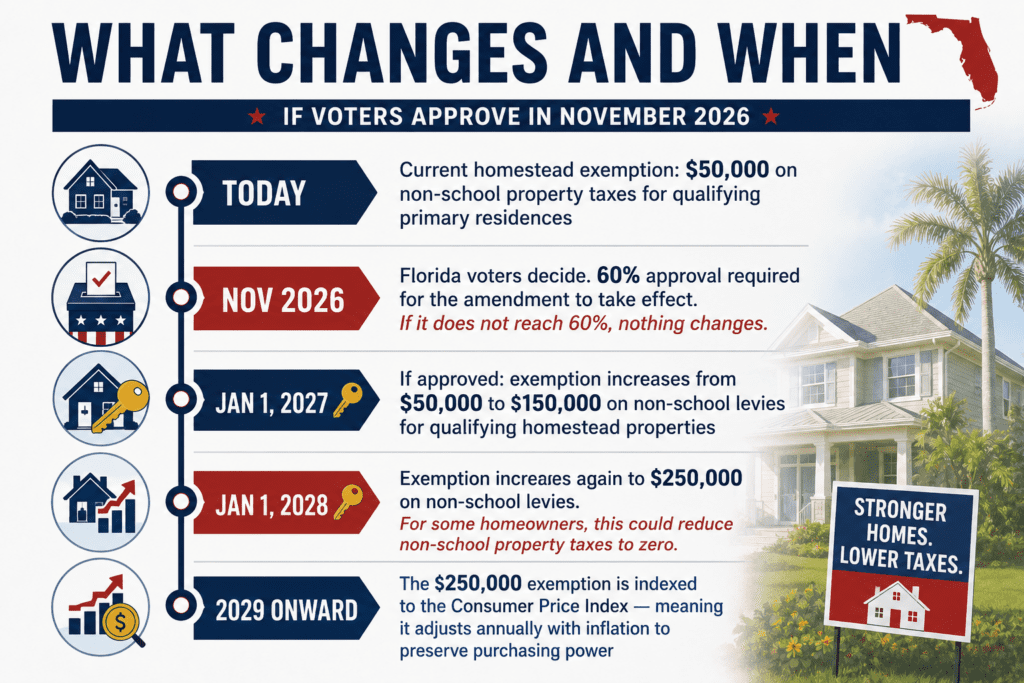
Sources: Florida Realtors, James Moore CPAs, Florida Senate official release, Click Orlando — June 2026
What Does This Mean in Real Money for Orlando Homeowners?
Let’s put some numbers on it!
The infographic from the citizen voter guide projects $1,048 in immediate savings for homeowners with $250,000+ in property value in 2027, rising to $2,096 in permanent annual savings once the full $250,000 exemption takes effect in 2028. These are estimates based on statewide average millage rates of 10.48 mills, your actual savings will vary based on your specific assessed value and your local millage rate.
Here’s how the math works in practice for Orlando-area homeowners:
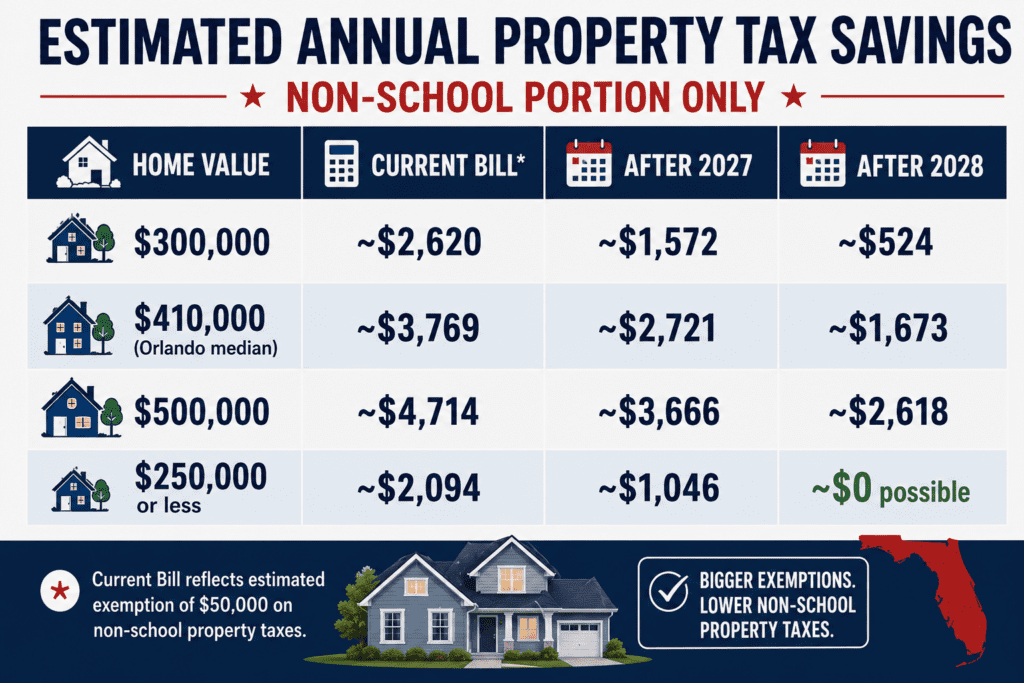
*Estimates based on 10.48 mill statewide average rate on non-school levies only. Your actual tax bill will vary based on your county’s millage rate, your home’s assessed value, and any existing exemptions you already receive. School taxes are not affected. Consult a licensed CPA for your specific situation.
Important: school taxes are not changing
The increased exemption applies only to non-school property tax levies. The portion of your property tax bill that goes to school district funding is specifically carved out and protected under HJR 1-F. School district taxes remain at the current $25,000 exemption level regardless of what voters decide in November.
What Protections Are Built Into the Amendment?
HJR 1-F includes several provisions designed to address concerns about the impact of reduced property tax revenue on local services and infrastructure.

Sources: Florida Realtors, Florida Senate official summary, James Moore CPAs, Click Orlando — June 2026
What HJR 1-F Does NOT Change
It’s worth being clear on what this amendment does not do, because there has been a lot of discussion about property tax elimination that goes further than what HJR 1-F actually proposes.

What This Means for Orlando Real Estate Right Now
For buyers considering Orlando, this is worth understanding before you make a decision. If the amendment passes, homeowners who establish Florida residency on or before December 31, 2026 would qualify for the full $250,000 exemption beginning in 2028. New residents arriving after that date would start with the $50,000 exemption and qualify for the full exemption after five years of Florida residency.
That distinction matters if you’re relocating and timing your move. It doesn’t change whether Orlando is a good place to buy, the market fundamentals here remain strong regardless of what happens in November. But it’s a detail worth knowing if you’re making decisions about timing.
For sellers, the amendment, if passed, could make Florida homeownership more affordable for buyers, which generally supports demand. Lower carrying costs on primary residences have historically supported home values over time.
For current homeowners, the most important action right now is simply to stay informed. The November ballot is five months away. We’ll be covering the outcome and what it means for Central Florida property owners as it develops.
Questions about buying or owning a home in Orlando?
The Ray Lopez Team has been navigating Florida real estate for over 20 years. Reach out at 407-697-8298 or search available listings at orlandofreehomeinfo.com
Ray Lopez Team | Keller Williams Advantage II Realty
407-697-8298 | closings@raylopezteam.com